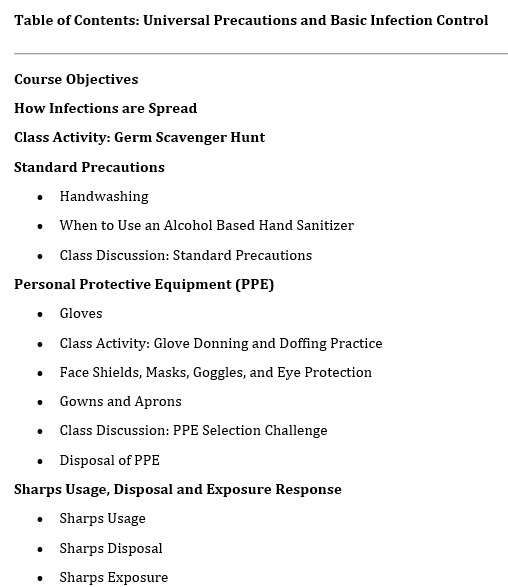
Description
Every day, your frontline staff face the responsibility of protecting themselves and the people they serve from preventable infections. Without proper training, small mistakes in hygiene, equipment use, or sharps handling can quickly put both staff and clients at risk. That’s why infection control training is not optional—it’s essential.
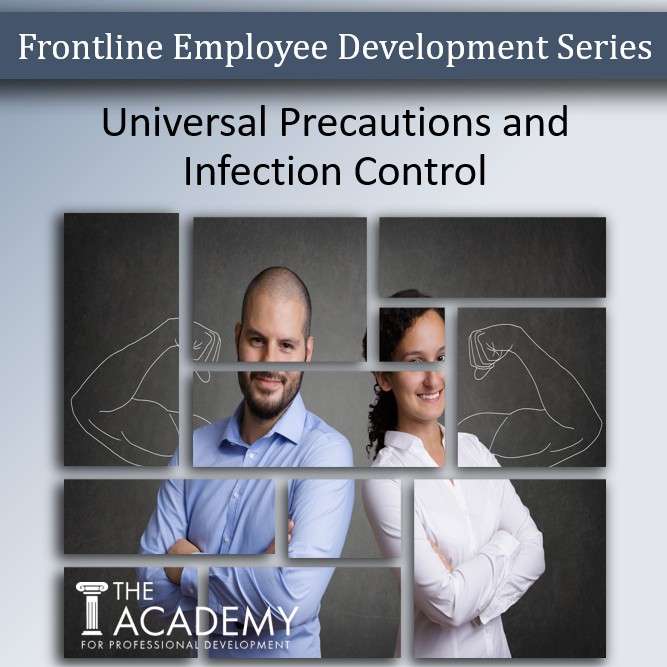
The Universal Precautions & Basic Infection Control Curriculum, part of the Frontline Employee Development Series, is designed to provide agencies with a ready-to-use, comprehensive training program that goes beyond the basics. This curriculum equips care staff with the knowledge, skills, and confidence they need to break the chain of infection and ensure a safe, healthy environment for everyone.
Why This Curriculum Matters
Infections occur when germs enter the body, multiply, and cause harm. By training staff in universal precautions—the practice of treating all blood and body fluids as potentially infectious—you are instilling habits that protect staff, clients, and the larger community. This curriculum makes infection control simple, practical, and applicable to real-world care settings.
What’s Included in Each Curriculum Package
Instructor Manual
- A step-by-step guide for supervisors to deliver effective training.
- Includes detailed lesson content, interactive discussion points, student assessments, and activities that reinforce critical concepts.
- Designed for both small-group and one-on-one coaching sessions, making training adaptable to your agency’s needs.
Employee Manual
- Each manual walks staff through key training content in easy-to-understand language.
- Includes space for reflection, note-taking, and activity sheets to encourage active participation.
Manuals and materials, including a PowerPoint presentation, are also provided on a flash drive.
Key Training Topics Covered
The Chain of Infection
-
-
Staff learn the three elements required for infection to spread:
-
Source: Where germs live and multiply (e.g., sinks, human skin).
-
Susceptible Person: Anyone with an entry point for germs (e.g., cuts, medical devices).
-
Transmission: How germs move from one person to another (e.g., contact, splashes, sharps).
-
-
By understanding these elements, staff can identify and disrupt the cycle at multiple points.
-
Hand Hygiene: The First Line of Defense
-
Teaches the five critical steps of proper handwashing.
-
Clarifies when to use soap and water versus alcohol-based sanitizer.
-
Reinforces why hand hygiene is the single most important precaution for preventing the spread of infection.
Personal Protective Equipment (PPE)
-
-
Proper use of gloves, gowns, masks, goggles, and face shields.
-
Emphasizes that PPE is only effective when combined with hand hygiene.
-
Hands-on practice for donning and doffing PPE to avoid accidental contamination.
-
Sharps Safety and Disposal
-
-
Clear guidelines for preventing injuries and exposures.
-
Reinforces safe handling practices: never bend, recap, or break needles; never pick up broken glass with bare hands.
-
Teaches staff how to properly dispose of sharps in puncture-resistant containers and what to do in case of accidental exposure.
-
Benefits for Your Agency
-
Compliance Made Easy: Meets industry standards and helps agencies align with OSHA and CDC guidelines.
-
Consistency Across Staff: Standardized manuals ensure every employee receives the same high-quality training.
-
Confidence in Care: Staff leave training knowing how to protect themselves and the individuals they support.
-
Reduced Risk: Proper infection control practices lower the risk of workplace exposures, illnesses, and costly liability issues.
Invest in Safety, Invest in Quality Care
By implementing the Universal Precautions & Basic Infection Control Curriculum, you’re not just training your staff—you’re safeguarding your organization, your clients, and your community. With this curriculum, your agency demonstrates a commitment to professional excellence, regulatory compliance, and the health and dignity of every individual you serve.
👉 Order today and equip your staff with the tools they need to stop infections before they start.